Rubber Supplier Audit Checklist: 12 Key Areas to Review
This checklist covers 12 critical audit areas for industrial rubber suppliers, from raw material sourcing to quality systems. It helps procurement managers verify compliance, production capability, and risk factors during site visits or document reviews.
- A structured audit checklist prevents missed risks in raw material, production, and quality systems.
- Reviewing 12 specific areas, including certifications and logistics, gives procurement teams a complete supplier profile.
- Documented answers and visible red flags help distinguish qualified suppliers from risky ones.
- Combining document review with site visits improves the accuracy of supplier evaluation criteria.
Why a structured checklist matters
A rubber supplier audit checklist turns a vague site visit into a repeatable evaluation process. Procurement teams need to compare multiple suppliers against the same criteria to make defensible decisions. This approach reduces the risk of selecting a vendor who looks capable on paper but fails in delivery, quality, or compliance.
The 12 areas below cover the full scope of an industrial rubber audit. They apply whether you are evaluating a compounder, a molder, a converter, or a distributor. Each item includes what to verify and red flags that signal problems.
1. Verify raw material sourcing and traceability
Check the supplier’s incoming material controls. Ask for mill certificates, material data sheets, and lot tracking procedures. Confirm how they verify the origin of natural rubber, carbon black, fillers, and chemical additives.
For synthetic rubber grades, request evidence of supplier qualification and incoming inspection. A reliable supplier maintains a master list of approved raw material suppliers and rejects nonconforming lots.
Red flags to watch for:
- No documented incoming inspection process.
- Inability to trace finished goods back to specific raw material lots.
- Reliance on a single, unverified supplier for critical raw materials.
2. Review quality management system certifications
Ask for current certification documents, not just certificates on a wall. Verify the scope of the certificate covers the products you need. Confirm the certification body is recognized in your market.
Check the certificate expiry date and the audit interval. A supplier with a valid ISO 9001 certificate is a baseline, not a guarantee. Review the most recent audit report if available to see any major findings.
Red flags to watch for:
- Certificate out of scope for the products you require.
- No internal audit schedule or quality manual.
- Reluctance to share the scope of the certification.
3. Inspect production equipment and maintenance records
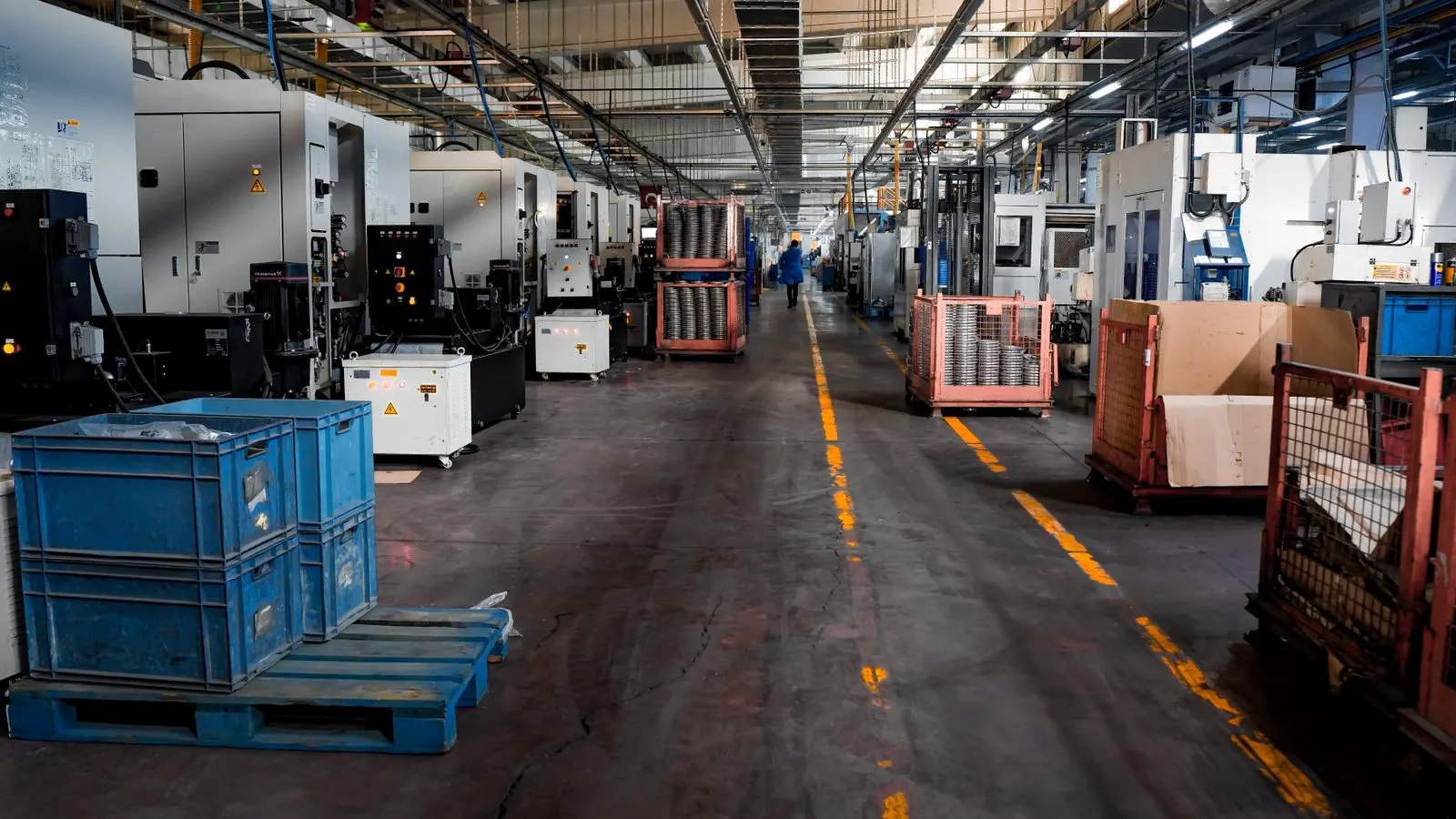
Visit the production floor and observe the state of equipment. Check for preventive maintenance logs and calibration records for critical instruments. Look for signs of wear, leaks, or makeshift repairs.
For compounders, examine the internal mixer, open mixer, and extrusion lines. For molders, check press capacity, temperature control systems, and tooling condition. For converters, review vulcanization equipment, cooling systems, and cutting lines.
Red flags to watch for:
- Missing or incomplete maintenance records.
- Unlabeled or uncalibrated measuring instruments.
- Equipment operating well beyond its rated capacity.
4. Assess process controls and standard operating procedures
Request the supplier’s standard operating procedures for key processes. Verify that operators follow documented work instructions. Check how they control critical process parameters like mixing time, temperature, pressure, and cooling rate.
Ask for process capability studies if the supplier produces precision parts. For standard products, review first article inspection records and in-process checks.
Red flags to watch for:
- No documented process parameters or they change frequently.
- Operators not following written procedures.
- Lack of in-process inspection points.
5. Examine final inspection and testing capabilities
Review the supplier’s final inspection procedures. Check their testing equipment for hardness, tensile strength, elongation, dimensional accuracy, and other relevant properties. Confirm the lab is equipped with the necessary instruments and that operators are trained.
Ask for sample test reports for recent production batches. Verify that the supplier performs destructive testing when required and maintains records of results.
Red flags to watch for:
- No calibration certificates for testing equipment.
- Inability to provide test reports or sample data.
- Testing only performed on a sample basis without clear sampling plans.
6. Confirm compliance with relevant standards and regulations
Identify the standards and regulations that apply to your products. This may include material specifications, safety requirements, environmental rules, or industry-specific norms. Verify the supplier can provide test reports or declarations of conformity for each standard.
For automotive, aerospace, or medical applications, the compliance requirements are stricter. Ask for PPAP, AS9102, or ISO 13485 documentation if applicable.
Red flags to watch for:
- No knowledge of the specific standards that apply.
- Inability to provide compliance documentation.
- Reliance on verbal assurances instead of written evidence.
7. Evaluate production capacity and lead times
Check the supplier’s actual production capacity against their quoted lead times. Ask for a breakdown of their current order backlog and how they prioritize new orders. Review their production schedule to see if they can meet your volume and delivery requirements.
For seasonal products or projects with fixed deadlines, ask about their capacity planning process. Confirm whether they have backup equipment or contingency plans for equipment failure.
Red flags to watch for:
- Lead times that seem too short for the complexity of the product.
- No visibility into production schedules or backlog.
- Inability to handle volume changes or rush orders.
8. Review logistics and packaging standards
Assess how the supplier packages and ships their products. Check for damage control measures, labeling accuracy, and handling instructions. Review their shipping records and on-time delivery performance.
Ask about their logistics partners and how they track shipments. For sensitive products, confirm they have procedures to prevent contamination, moisture exposure, or physical damage during transit.
Red flags to watch for:
- Frequent shipping delays or late deliveries.
- Poor packaging that leads to product damage.
- No tracking system or communication during transit.
9. Check financial stability and business continuity
Review the supplier’s financial health and business continuity plan. Ask about their ownership structure, employee turnover rate, and investment in equipment. A supplier with financial instability may cut corners on quality or fail to meet deadlines.
Check if they have a business continuity plan for risks like natural disasters, supply chain disruptions, or key personnel loss. Confirm they have adequate insurance coverage.
Red flags to watch for:
- High employee turnover, especially in technical roles.
- No documented business continuity plan.
- Financial distress or recent ownership changes without transparency.
10. Assess workforce competence and training
Evaluate the skill level of the supplier’s workforce. Check training records for operators, inspectors, and engineers. Verify that they have the expertise to handle your specific product requirements.
Ask about their onboarding process for new employees and their ongoing training programs. A supplier with a knowledgeable workforce is more likely to maintain quality and respond to changes.
Red flags to watch for:
- High turnover in key roles.
- No training records or development plans.
- Operators unfamiliar with their own processes.
11. Evaluate customer service and issue resolution
Test the supplier’s responsiveness to inquiries and issues. Ask for examples of how they have handled complaints, nonconformances, or design changes. Review their customer satisfaction metrics and complaint resolution process.
A good supplier has a clear escalation path and a process for corrective action. Ask for their root cause analysis methodology and how they implement corrective actions.
Red flags to watch for:
- Slow response times to inquiries or issues.
- No documented complaint resolution process.
- Repeat complaints for the same issue.
12. Review environmental and ethical practices
Check the supplier’s environmental management system and ethical practices. Ask about waste disposal, chemical handling, and energy consumption. Review their compliance with local environmental regulations.
For global supply chains, verify their adherence to labor standards and ethical sourcing practices. This includes working conditions, fair wages, and responsible sourcing of raw materials.
Red flags to watch for:
- No environmental management system or compliance records.
- Poor waste disposal or chemical handling.
- No evidence of ethical sourcing or labor standards.
How to use this checklist
Start by assigning each area a weight based on your project’s priorities. A high-value, safety-critical application may weight quality and compliance higher than a standard product. Use the checklist during document review and site visits. Document findings with photos, notes, and supplier responses.
Score each area on a simple scale and identify gaps. Discuss findings with the supplier before making a final decision. A structured approach to your rubber supplier audit checklist ensures you are not relying on gut feeling but on verified facts.
Quick reference table
| Audit Area | Key Documents/Checks | Red Flag |
|---|---|---|
| Raw Materials | Mill certs, lot tracking | No traceability |
| Quality System | ISO certificate scope | Out of scope |
| Production | Maintenance logs, calibration | Missing records |
| Process Controls | SOPs, process parameters | No documented controls |
| Final Inspection | Test reports, lab equipment | No calibration certs |
| Compliance | Test reports, DoC | No compliance docs |
| Capacity | Production schedules | Unrealistic lead times |
| Logistics | Packaging, shipping records | Frequent delays |
| Financial | Financial statements, insurance | No continuity plan |
| Workforce | Training records, turnover | High turnover |
| Service | Complaint logs, response times | Slow responses |
| Environment | EMS, waste disposal | Poor chemical handling |
Frequently asked questions
How long does a rubber supplier audit take?
A document review can take a few hours. A full site visit with all 12 areas typically takes one to two days, depending on the supplier's size and complexity.
Do I need to audit every potential supplier?
No. Use a tiered approach. Perform a full audit for critical suppliers and a document review for lower-risk suppliers. Adjust the depth based on the product's criticality and volume.
What if a supplier fails one area of the audit?
Assess the severity of the gap. Some issues can be corrected with a corrective action plan. Major gaps in quality or compliance may warrant disqualification.
Can I use this checklist for a new supplier or an existing one?
Yes. Use it for new supplier qualification and as a periodic review tool for existing suppliers. Re-audit at regular intervals or when significant changes occur.
Who should perform the audit?
A cross-functional team including procurement, quality, engineering, and supply chain. This ensures all aspects are covered and the supplier is evaluated from multiple perspectives.